Showing posts with label books. Show all posts

3.10.2015

“Top Ten Tuesday:” Five series of books for readers who like Harry Potter

March 10: Five Series For Readers Who Like Harry Potter


Here we are with top ten Tuesday again! This week, the theme is “Books to read if you liked (blank)." (Yeah I'm doing five this week. Whatever!)

It's no secret (or maybe it is?) . . . I think Harry Potter is a bit over-rated.

I liked it OK. I enjoyed it. It was fun. I was of the generation that bought each book as it came out, and “grew up" with the characters.

But it was far from my favorite childhood fantasy novel series. FAR FROM. Here are five apparently and tragically overlooked fantasy novel series that I loved when younger. All of them blow Harry Potter out of the water. All of these are on my shelves to this day. I let go of all my Harry Potter books years ago — I just didn't care any more. THESE were the books I loved and wore to pieces growing up and could never let go of.

I am so sad I don't see more love for these books around the bookiverse. I give them ALL MY LOVE to make up for their cruel neglect. Dear books, I will never abandon you!

Lloyd Alexander, The Prydain Chronicles. Like Harry Potter, the characters start young and grow through the course of the books; there is a group of loyal friends; they must battle an ancient and overpowering evil. Set in an ancient and mysterious land something like ancient Wales. These are probably more middle grade but I re-read them occasionally to this day.

Susan Cooper, The Dark is Rising series Oh my goodness.  Like Harry Potter, they are contemporary and British and Magic is real but secret. But this magic is...oooohhhhhh. This magic. Never a plaything; always just on the edge of uncontrolled. Start with Over Sea, Under Stone, but know that my unrivaled favorite is The Dark Is Rising, which comes second in the sequence, so don't stop with the first one! These also follow children who mature over the course of the novels battling an ancient malevolent force.

Ursula LeGuin, The Earthsea Cycle. Best world building I have ever read (possibly rivaled only by Frank Herbert in Dune and, of course, Tolkien). Perfect prose. Even Harold Bloom admires LeGuin's prose. Compelling characters. The first book is a school story, though not the rest. And again, the magic? Incomparable. Beautiful. Frightening. Again with the Battle Against Evil, though LeGuin has a much subtler conception of evil than any of these others. LeGuin is one of my all-time favorite authors though (definitely in the top ten), so I can't say enough good things about these books.

Mervyn Peake, Gormenghast. (I haven't read the whole trilogy but what I have read was fantastic). Steerpike would obviously have been a Slytherin. Rare to find such a frank anti-hero in this genre. These are by far the densest books among my recommendations here as the prose is delightfully flowery, so if you prefer a lighter easier read: not these.

Garth Nix, the Abhorsen series. Sabriel, the first book in the series, is just SO good (I like the others too though not as much). A young woman leaves school to rescue her father, the Abhorsen, who lays the dead to rest but has himself been trapped in death...and that's just the first book. Of all my recs here, these read closest to Harry Potter, both in prose style and in atmosphere.

Please comment and let me know if you love any of these as much as I do, or if you are planning on picking them up!

Happy reading!


3.09.2015

Joining the Classics Club

I've been looking for classics book bloggers since I started blogging myself, and . . . they're hard to find! But I HAVE FOUND MY PEOPLE!

The Classics Club is a consortium of bloggers joining together to share their experiences reading the classics. Which, you know . . . is a thing I do! And all one needs to do to join them is come up with a list of 50 classics you plan to read in at most the next five years. So. I am joining, and I am SO excited. Book blogging is much more fun when it includes other book bloggers.

I have hundreds of classics on my life list, but for the purposes of the classics club, I narrowed it down to what I am most interested in reading with the next few years.

Without further ado, my list:

3.06.2015

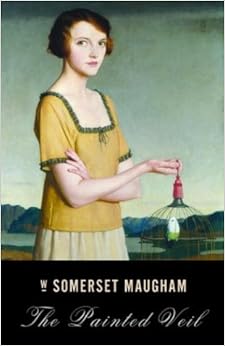
The Painted Veil, by W. Somerset Maugham

I liked this book a great deal. I picked it up on a whim at Barnes & Noble where I was browsing with no particular purpose. I have been wanting to try Maugham for a while but felt overwhelmed by the heft of On Human Bondage. I leafed through this book and The Razor's Edge and this book won, in large part because the edition of The Razor's Edge I picked up was in painfully small font, which tends to irritate me over the course of a book. Such are the deep considerations that go into my novel selection.

Anyway.

 The Painted Veil follows Kitty Fane, a young English socialite who marries unwisely for selfish reasons, moves to Hong Kong with her husband, proceeds to have an affair with a rather odious man, and is found out (this all happens very early in the book; no spoilers).

Kitty's husband, Walter, is rather a tortured soul and wishes death on both himself and his wife, which he decides to accomplish by “heroically” dragging Kitty into the epicenter of a cholera outbreak (he is an MD specializing in bacteriology). There he proceeds to fight cholera and be tortured by his soul, while Kitty proceeds to have some very interesting spiritual and emotional growth.

I've read a few books about adultery; Madame Bovary and Anna Karenina spring to mind. I thought the handling of it here was much more interesting than either (though I'd say Anna Karenina is the greater novel overall).

Neither Emma nor Anna really learns much from their affairs. Their experiences just pull them deeper and deeper into all sorts of misery. Both of them end (SARCASTIC SPOILER ALERT FOR HUNDRED YEAR OLD BOOKS!) by dramatically killing themselves. Because DEATH is the price of a woman's transgressive sexuality!

Not for Kitty Fane, bless her heart and the heart of Somerset Maugham.

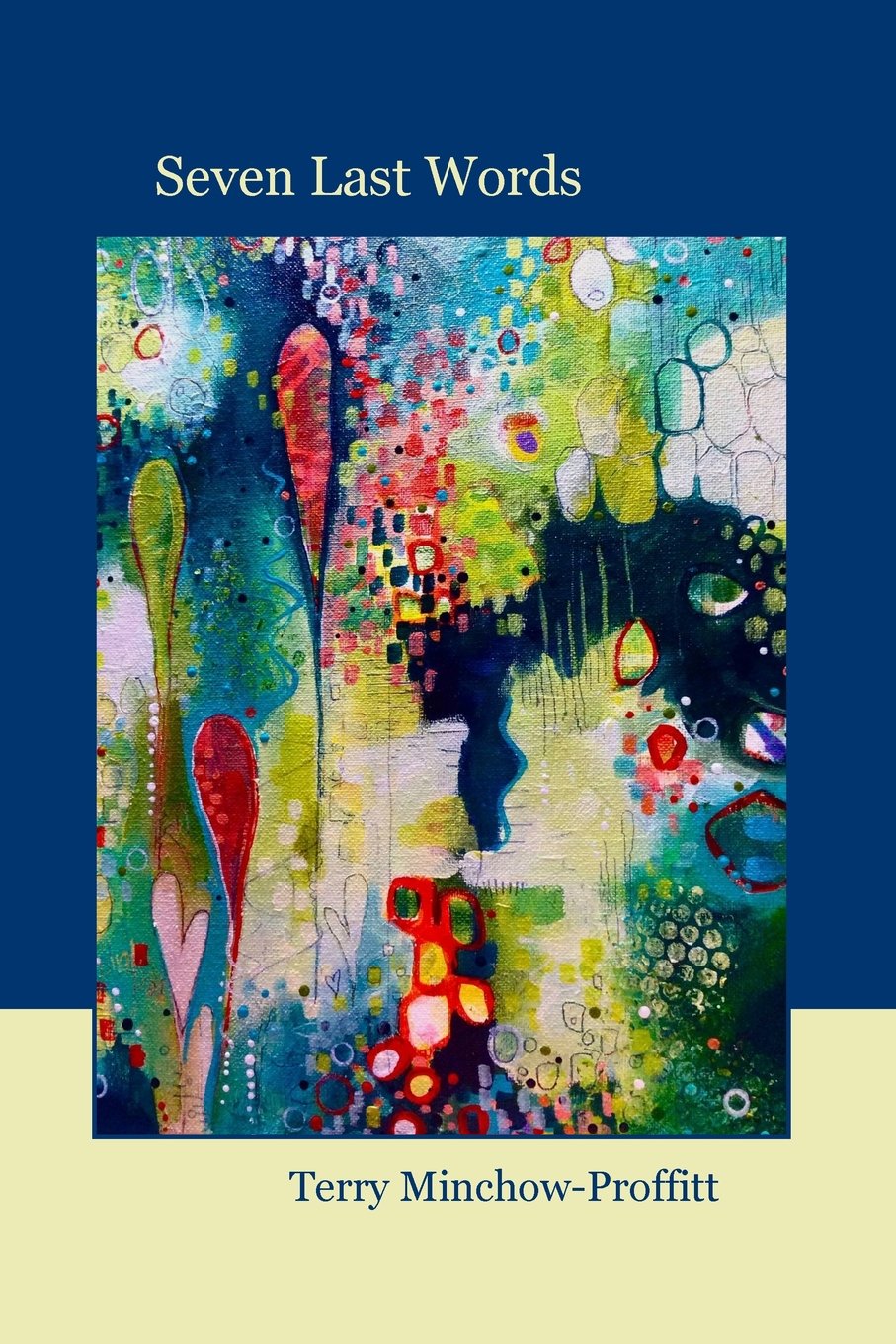
Seven Last Words, by Terry Minchow-Proffitt

In the interests of full disclosure, I'm biased about this book. Mud Season Review published this poetry while I was poetry editor there; I blurbed the book for Terry; he kindly sent me a copy as a gift.

I'm not sure if all that means that I am likely to not tell the truth about the book, though. I mean . . . I published the poems! I blurbed the book! I am SO EXCITED about this work!

I really like poetry that takes up religious themes (I should, given my current editing position . . .), but I am damn picky about my religious poetry. I don't like abstractions. I don't like schmaltz (well, I like schmaltz, but not in this context). I don't like thinly veiled theological polemics. I don't like trite answers.

This poetry is none of those things. Rather, it presents a cycle of seven poems, each of which meditates on one of the Seven Last Words of Christ as he died. These may be found here, where they were first published at MSR. (Go ahead and read the poems there, but don't hesitate to buy the chapbook too if you like them, as it includes extra material, like an extended author interview, a forward, and an afterward. Also the artwork is bound up with them, which is great!)

3.03.2015

“Top Ten Tuesday:” All Time Favorite books


All Time Favorite Books

You're kidding, right? There's just no way. No way. I love too many books too much to narrow it down to ten. BUT NARROW I WILL, dear readers. NARROW I WILL.

The specific instructions for this top ten said that we should pick our top ten "from the past 3-5 years." I am confused by these instructions. Books that we've read in the past 3-5 years? That's hard to remember (I only recently started keeping track). Books published in the past 3-5 years? Almost none of my favorite books fall in that category.

I decided that "favorites of the past 3-5 years" meant that I wouldn't include childhood favorites, or books I adored years ago but haven't cracked since. The following, in no particular order, is a list of books I currently love or have loved quite recently. These are all books I like to return to. If I haven't done a full re-read of all of them (and six of them I have fully re-read, and several of those I have re-read more than twice), they are all books that I like to pick up and page through and be reminded of the delights therein. These are all books I could not possibly forget.

3.02.2015

February Books and Reading Summary and Roundup

I read sixteen books in February. These were (in the order I read them):

Between the Acts, by Virginia Woolf
The First Time We Saw Him, by Matt Mikalatos
Indian Killer, by Sherman Alexie
The Picture of Dorian Gray, by Oscar Wilde
Rebecca, by Daphne duMaurier
Parable of the Sower and Kindred, both by Octavia Butler
The Cancer Diaries, by Audre Lorde
These Old Shades, Devil's Cub, Regency Buck, An Infamous Army, Venetia, Frederica, The Grand Sophy, and Cotillion, all by Georgette Heyer.

Of these books:
4 were by authors of color; 12 were by white authors.
3 were by men; 13 were by women.
2 were nonfiction; 14 were fiction.
7 were hard copies; 9 were ebooks.
4 were re-reads; 12 were first-time reads.
1 was originally published in the 19th century, 14 in the 20th, and 1 in the 21st, with a date range of 1890 - 2014. 

I acquired fifteen books in February. From the bottom of the photo up, these were:

Fun Home, by Alison Bechdel
My Cousin Rachel, by Daphne duMaurier
Charity Girl and The Corinthian, both by Georgette Heyer
King, Queen, Knave, by Vladimir Nabokov
The Book Thief, by Zusak
The Labyrinth of Solitude, by Octavio Paz
Ravelstein, by Saul Bellow
Close Range, by Annie Proulx
Truth and Beauty, by Ann Patchett
Seven Last Words, by Terry Minchow-Proffitt
Devil in a Blue Dress and A Red Death, both by Walter Mosley
Thrones, Dominations, by Dorothy Sayers
(not pictured) Finding God in the Verbs, by Jennie Isbell and J. Brent Bill


Of these:
1 was a gift (Thanks, Terry!)
2 I bought new
5 were free (either in free piles or from BookMooch)
7 I bought used
2 are copies of work I have read but wanted to own; 13 are TBR books.

2.28.2015

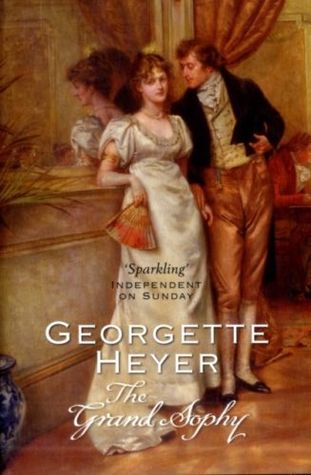
Georgette Heyer: All The Love!

I had grand plans this month to do a lot of reading for Black History Month. I sort of accomplished some of this . . . but mostly, I am afraid that I binge-read Georgette Heyer. I read eight (EIGHT!) Heyer novels over the course of perhaps two weeks. Nothing could stop me, not even my promise to finish reading a Very Intellectual Bork On Islam for my two-person book club (V.S. Naipaul's Among the Believers, which I am not really enjoying.)

Georgette Heyer is worth being lazy for.

Heyer was an English writer of romance and mystery novels. She was born in 1902, died in 1974, and wrote from the 20's until her death. There are not many authors who give me more pure, unalloyed pleasure than Heyer. I didn't think I could possibly enjoy romance novels until I read Heyer (and I have read many romance novels since trying to discover books I will like even half as much as hers . . . to absolutely no avail. Other than Austen, I like literally no other romance authors.)

Her romances are almost all Regencies (set between 1811 and 1820), though a good handful of them are set thirty years earlier than that. Her thrillers are generally contemporary to when she was writing them, though some are also set in the Regency or Georgian periods. She more or less single-handedly created the modern genre of the "Regency Romance," but no one afterwards has at all equaled her.

What I find so delightful about her is her sense of the ridiculous. She knows exactly when to lead us along with a ridiculous plot (almost always) but also when and how to make fun of it (again, almost always).

2.24.2015

“Top Ten Tuesday:” Favorite heroines

Top Ten Favorite Heroines From Books


10. Cordelia Naismith Vorkosigan (The Vorkosigan Saga)

Cordelia is my favorite sci-fi heroine by far. She's smart, she's funny, she is an equal partner to her love interest / husband in everything she does (without falling into the "shrewish nagging woman" trope), she is a mother without abandoning her own identity, she is a scientist in the society of her birth and a shrewd politician in the society she marries into, despite the latter's entrenched patriarchy. She is pretty without being a Mary Sue and her physicality never defines her.

2.20.2015

Octavia Butler: “Parable of the Sower” and “Kindred”

I am afraid that I didn't love these books as much as I had hoped to. I was really ramped up for reading some Octavia Butler, as I had heard every good thing in the world about them. I'd read Parable of the Sower in high school and didn't remember much about it. I wanted to give it another try, as well as check out Kindred, which is possibly Butler's most famous novel.

They're both good books for sure. Parable of the Sower is the first in a dystopian duology about a near-future crumbling America (rising temperatures have driven the cost of water and food up enormously; the central government exists in name only; anarchy reigns) and follows a young woman  — a teenager, really — who ends up founding a new religion. It explores issues of morality, change, and race.

Kindred is about another young woman (slightly older — early twenties) who finds herself drawn back to the antebellum South in order to save the life of her slave-owning ancestor so he can father a child by his slave and, thus, ensure that Dana (the narrator) is born herself. This book explores race as a much more primary theme (obviously) with the nature of love thrown in as well.

I found Sower more thought-provoking and interesting but Kindred more compelling as a story.

Sower is a more complex story in a lot of ways. There are many more characters, more moving parts, just a lot more going on. I found the heroine, Lauren, a little irritating (we follow her from about age 15 to age 18 and she is ridiculously, preternaturally, more mature, intelligent, and on top of things than everyone around her, which I found a bit exasperating), but I liked her more than I didn't. I would have liked some more world-building; there's some, but not what I had hoped for given the praise I heard for the book. The reasons for the collapse of civilization are left more than a bit unclear, for one. There wasn't as much plot as I'd hoped for, either. It was about surviving in a dystopian near-future (and founding a new religion), which you might think would be Enough Plot for me, and probably it should have been, but . . . I wanted a bit of something else driving the forward momentum of the story.

This could have been done in a number of ways — introducing a bit more self-doubt in Lauren would have been particularly compelling to me, as it would give her an internal challenge to overcome. Alternatively, she could have stolen a bit of character development from one of the secondary characters — one of these had an interesting arc wherein he really struggled to accept the brutalities of a dystopian reality (for instance, he struggled with the idea that he had to injure or even kill others). If this had been Lauren's arc, I also would have been more compelled by her. But I wasn't, because she was so smugly right all the time.

I think if I was more into dystopians as a genre I would have been really into this (and if you are into dystopians, you should definitely read this; it was way ahead of the curve, sort of the ur-dystopian, like 1984 or Brave New World), but I just wasn't. Again, I want to reiterate that this wasn't a bad book by any stretch of the imagination. It was smart and well written and thoughtful and everything good . . . I just wasn't into it, and I was disappointed because I really wanted to be.

I liked Kindred more but I still wasn't entranced by it.


2.17.2015

“Top Ten Tuesday:” Book related problems

Today in Top Ten Tuesday, the lovely folks over at The Broke and the Bookish ask us to list “Ten Book Related Problems I Have.”


1.) In my life, there is no such thing as a problem caused by books. Books solve all problems, balm all wounds, and are their own justification.

Occasionally book love forces me to look at the world differently in some pragmatic ways (as in: "How can I afford books this month?" and, "I don't think we can move into that apartment; it doesn't have enough space for books"), but these are not problems; these are travails of love.

2.) Ibid.
3.) Ibid.
4.) Ibid.
5.) Ibid.
6.) Ibid.
7.) Ibid.
8.) Ibid.
9.) Ibid.
10.) Ibid.

2.16.2015

Children's Books For My Son's First Birthday . . . and our current favorites.

I intended today to be a post on Octavia Butler (and also a catch-up on my missed Object Permanence project yesterday — expect that later this evening) but I became utterly distracted children's-book-shopping on the internet for my son's first birthday coming up in March. I love children's books and I am going to share my excitement with you!
From "May the Stars Drip Down," by Jeremy Chatelain;
illustrated by Nikki McClure

We are a low-key family when it comes to birthdays, and we are especially low-key when it comes to a birthday we know he won't remember. I will make some cupcakes, and, if we are very lucky and the weather is warm, we will go outside under the trees and have presents, cupcakes, and singing. Guests will include me, his Papa, his auntie who lives close by, and maybe a grandparent or two. Oh, and his teddy bear.

As far as gifts, my husband is making a little something in the wood shop, and I just can't help myself with the books. I set a strict budget (it should probably have been stricter, but . . . books!), which worked out to four books.

2.13.2015

Rebecca, by Daphne duMaurier

I expected to like and enjoy this book; I did not at all expect the passion I ended up feeling for this book. I stayed up until 1 am on a worknight unable to put it down! The next night I binge-watched the BBC mini-series! This book was a ridiculous amount of fun to read, the prose was excellent, and the author held together what should have been (well, which kind of is) a ridiculous plot with amazing aplomb, pulling off some special effects along the way.

Here's the basic deal with Rebecca (non-spoiler paragraph to come; all of this you can get from the back cover or the first few pages): Young innocent girl falls in love with billionaire (well, this is Britain between the wars, so not billionaire but landed gentry) Maxim DeWinter, who has a Tragic Past: his wife, Rebecca, died just a year ago. He meets our ingenue (who remains unnamed throughout the book), marries her, and carries her off to his ancestral home, Manderly, where our heroine has to make sense of the past.

It's a classic gothic romance that more than lives up to expectations. It can be read and enjoyed even by those who have zero interest in gothic romances. I don't want to try to tell you about my love for this book while trying to hide what happens, so: spoilers behind the cut!

If you don't want to read it, there is a BBC miniseries starring Jeremy Brett (swoon) that I have now also watched. It hews very closely to the text, almost all of the dialogue being lifted straight from the book. Recommended!

Spoilers away!


2.10.2015

“Top Ten Tuesday:” Let me complain to you about romance novels.

The discussion this week over at The Broke and the Bookish is romance novels. Specifically, why do they suck? And how can they do better?

I am not a big romance novel reader . . . but I COULD be, if all of these things didn't suck about romance novels. It is possible for a story primarily about love and romance to be an amazing, gripping, moving, story. I love Jane Austen. But mostly . . . modern romance novels suck. Sorry.

The Number One reason romance novels suck: Terrible writing.

This is a problem throughout genre fiction. Somehow there seems to be an idea that because "what the reader wants" is just a love story, or zombies, or a murder, or space cowboys, or elves, or whatever, that the prose doesn't have to be good. WRONG. I mean, yes, a couple times a month after a really bad day at work, I sit down with a big glass of wine and whatever crappy romance is available on the Kindle for $0.99. I then proceed to mock it mercilessly. (One day I will live-tweet my reading of a crappy romance novel. It will be epic. You are all invited.)

So, I guess, if the romance industry's bar to clear is "readable enough to give someone a good laugh — at least they've spent $0.99 on it!" then OK they've cleared that bar. But if their bar is actually publishing good stuff? NOPE.

Way to improve: Try to publish good prose. Try.

Number Two: Actually this may be #1. It's close. REGRESSIVE GENDER POLITICS. Ohhh, this one makes me ill.

2.09.2015

January Reading Roundup: with numbers!

I know this is a boring and pedestrian book-blog thing to do . . . but I actually really like reading these from other bloggers, so here ya go.

I read fifteen (15) books in January. If you're my Facebook friend, you know that I said I read sixteen. I WAS WRONG I AM SO SORRY. How can you ever forgive me, right? I was counting a book that I was sure I was going to finish by the end of the month . . . but I finished it on February 1st. Ah well. You know what they say about counting your books before they've . . . hatched, eh?

Anyway. Here are the books I read in January, the serious as well as the fluff, in the order in which I read them, and with links to Goodreads:

Desert Solitaire, Edward Abbey
Fields of Blood, Karen Armstrong
The Professor and the Madman, Simon Winchester
On Immunity, Eula Biss
Breakfast at Tiffany's And Other Stories, Truman Capote
Franny and Zooey, J. D. Salinger
Citizen: An American Lyric, Claudia Rankine
Man's Search for Meaning, Viktor Frankl
Spiral Path, Katharine Kimbriel
Nothing More to Lose, Najwan Darwish
Maisie Dobbs, Jacqueline Winspear
The Duty of Delight, Dorothy Day
The Wandering Falcon, Jamil Ahmad
The Life-changing Magic of Tidying Up, Marie Kondo
Flatland, Edwin Abbott

If there are titles anyone is interested in hearing me talk about at greater length, just add a comment and I'll do so in another post.

In numbers, last month I read:

46% women
26% authors of color
40% fiction; 47% nonfiction; 13% poetry
20% ebooks; 80% Real Books
20% books I would characterize as "fluff;" 80% books I would characterize as "meaty."

I read 9 books published in the 21st century (though one of these was written in the 20th and only published later), 5 books published in the 20th century, and 1 book published in the 19th century.

Books I loved (and links to my full reviews of them):

If the sole criterion is Just Plain Loving It, my favorite book last month was Franny and Zooey.

If the criterion is sheer beauty, my favorite was Nothing More to Lose. In terms of cultural importance, however, definitely Citizen took the cake. Have you read it yet? Read it. 

Books I did not love:

Maisie Dobbs was a huge disappointment to me and I wouldn't recommend it to a lover of period mysteries. Not at all. The characterization was awful, the background was full of anachronisms, and she solved the day through the power of her intuition and singing. Ugh.

Spiral Path was mediocre, but at least not so disappointing; I went in expecting a fluffy YA fantasy, and that's exactly what I got. The premise here is supposed to be: It's Little House on the Prairie! But with MAGIC!

Sadly this installment wasn't as fun as the prior two books, so I doubt I'll continue with the series (unless the next one, when it comes out, seems like it will pick up a bit). I like my fluff have fewer plot holes, or if holes it must have, at least to be so egregiously full of them that it's laughable. What I'm saying is that I like Quality or Drivel, and Spiral Path produced neither. Sigh.

Plans for February:

Eh. While I'd like to bump my reading of authors of color up to 30% (my goal), my only real plan this month is to read down my TBR books a bit. I reorganized my shelves last night and obsessively put a sticky note flag on every TBR book and realized I had a lot more of these than I thought. I'm therefore planning to conserve my book-buying dollar and buy only ebooks (because I know I don't have the impulse control to stop, so I'm not even gonna try!) and books that I "need" for BookRiot's Read Harder Challenge. And maybe more authors of color, so I have a bit more choice when browsing my shelves / ebook library.

"Need." I know, I know . . . but BOOKS!

2.06.2015

Karen Armstrong, Dorothy Day, and Matt Mikalatos: my thoughts on three very different pieces of “religious” writing

If you're not religious,  I do think you might be into one of the books I'm going to discuss (the Karen Armstrong), so keep reading or skip down or whatever, but don't automatically click away!

As everyone who knows either me or this blog is well aware, I am a Quaker. Specifically, I am a progressive Christian Quaker who likes to keep a foot in multiple worldviews. I am (almost) equally comfortable hanging out with evangelicals, atheist skeptics, academic theologians and philosophers, and of course My Own People, liberal Quakers.

My faith is a choice. I don't "know" there is a god in the bedrock way many do, though sometimes I wish I did. The best way to describe that part of my brain is agnostic — I just don't know. Again, I wish I did. I wish I had that kind of ontological certainty. I don't. There isn't any way to give it to me, and I am not going to lie: I ain't got it.

However, I give my heart and my life enthusiastically to the idea that God (the Christian God) is real, and act in all things as if ze is. Which, you know, I think is fine, because isn't that the whole point of faith? Not knowing, but giving yourself to it anyway? I don't really see myself as less of a Christian or as a Quaker for being honest about that, though I do strongly identify with the Thomas of the Gospels. Anyway. 

All that is a preamble to say, I read a lot about religion, and what I read is quite diverse. I like academic theology (including in religions other than Christianity, mostly Judaism), religious memoir, pure philosophy (including from atheists — I have always been fond of Bertrand Russel, though I can't stomach the New Atheists), and straight-up devotional literature.

In the past monthish, I've finished reading three very different books: Karen Armstrong's Fields of Blood: Religion and the History of Violence, Dorothy Day's The Duty of Delight, and Matt Mikalatos' The First Time We Saw Him: Awakening to the Wonder of Jesus.

2.03.2015

“Top Ten Tuesday:” Books I can't believe I haven't read

The theme for today's "Top Ten Tuesday" over at The Broke and the Bookish is . . .

Top Ten Books I Can't Believe I Haven't Read

I am interpreting this as "Authors I Can't Believe I Haven't Read" … except for the last two because the shame degree is truly sky-high. You will see what I mean.

At any rate, here are seven authors that I am deeply ashamed to say I have read nothing by. Nothing. Not. One. Thing. (I have works by many of these fine writers waiting for me on my shelves, though!)

Eight authors I find it almost inconceivable that I have never read:

Joyce Carol Oates
William Faulkner
Flannery O'Connor
Alice Munro
David Foster Wallace
Thomas Pynchon
Saul Bellow
and
Chinua Achebe

And, to top it off, two books that truly alarm me every time I contemplate that I have not read them:

A Farewell to Arms
and
The Catcher in the Rye

oof. That's it for today, folks. I will be back on Wednesday with a links roundup and then, if you're still speaking to me, back again on Friday with a book review!

2.02.2015

An apologia for writing in books

I write in books. 

Oh, how I love writing in books, and I am afraid I will never really understand the criticism.

Anne Fadiman, in her lovely collection of essays Ex Libris: Confessions of a Common Reader draws a distinction between courtly and carnal lovers of books.

The courtly lover never dog-ears pages, handles books gently so as not to crack the spine, and would certainly never write in a book.

The carnal lover, however, dog-ears, underlines, and loves with abandon. The carnal lover shoves books in back pockets and then cracks the spine bending them back to read one-handed. The carnal lover definitely writes in their books.

I am a carnal lover. 

The criticism I hear most often is that I am "defacing" my books. But "defacing" implies a public act — something that ruins the experience of others. One can deface a library book, certainly, just as one can deface a statue or a wall or a building or any other work of art. But a private possession? And in particular, a mass-produced object, the content of which is available extraordinarily widely, and (in the case of classics) freely on the internet? I don't see how any amount of dog-earing, ripping of the covers, highlighting, and marginalia could possibly harm anyone or anything, including the work of literature itself.

But reading with a pen in my hand actively helps me.

I like to think critically about what I read. Sometimes I do read for pure, escapist pleasure. I don't (well, rarely) read Agatha Christie with a pen in my hand. I don't want to dissect her; I just want to read her.

Most anything else I read, though? I want to understand it. I want to follow it. I want to lift the curtain and see how the author is creating their effect (and so when I was trying to write my own murder mystery, I did read Christie with a pen in my hand). I want to retain it, I want to interact with it, and I want to be able to intelligently criticize it. I cannot come up with anything coherent to say about Ulysses without jotting it down (and, honestly, I haven't been — which is why there will be no forthcoming post on Ulysses on this blog!).

Yes, there are other ways I could do this. I could write in a steno notebook. I could take pictures of each section I want to mark, save it in Evernote, and mark up the file (I do something like this for borrowed or library books).

But really, why? It is so inconvenient. The steno pads would mount up. I would have to make an annoying electronic fuss. And then, when I re-read the book, I would have to go back, find the right steno pad or the right evernote file, and match up my notes with the text.

Why on earth would I want to do that when those big, beautiful margins are there, just waiting for me? Writing in books effortlessly connects "my" text with "the" text. It brings me closer to the author and the thoughts of the author. Responding to the text as the story or argument unfolds, I feel as if I am partaking in the "Great Conversation." And partaking in that conversation, even to the smallest extent, is much of what makes me happy in life. (Read this post of mine here on how books help me conquer my existential fear.)

Almost (though not quite) more than helping me connect with the thoughts of the authors, writing in books is like writing a letter to myself. I am a huge re-reader. I love coming across marginalia I scrawled years ago and seeing how my thoughts have changed (or haven't) on the passage. Sometimes I see things totally differently now — sometimes, too, my past self had an insight that my present self has forgotten about that. I do this most, by far, in my Bible, which is a wide-margin Bible specifically designed for this purpose. As I read and re-read my favorite passages, I can see the accretion of my thoughts, growing down the margins. So with my other books, though to a lesser extent.

I also love reading other people's marginalia. A book which has been scrawled in by a famous author dramatically increases in value. I love peeking into such books and seeing what their thoughts were on the matter at hand. I doubt I will ever rise to such prominence that my marginalia will have independent value, but I find that the principle is consistent. I react with glee when I open a used book to find that someone has been there before me. I like to read their insights, too. Apparently Studs Terkel would scold friends if they returned a borrowed book to him without adding marginalia. He told them that reading a book should "not be a passive exercise, but rather a raucous conversation." I agree.

One statement by the anti-writing-in-books set that really sets me off is "I love books too much to ever do that to a book!" Mark Twain was a scribbler-in-books. So were Coleridge, Blake, Darwin, David Foster Wallace, and C. S. Lewis. Are you really arguing that you love and respect books more than they did? Really? Really?

C. S. Lewis, in particular, was an ardent annotator. He had an entire system for his marginalia that he mentioned in one of his letters.

"To enjoy a book like that thoroughly I find I have to treat it as a sort of hobby and set about it seriously. I begin by making a map on one of the end-leafs: then I put in a genealogical tree or two. Then I put a running headline at the top of each page: finally I index at the end all the passages I have for any reason underlined. I often wonder -- considering how people enjoy themselves developing photos or making scrap-books -- why so few people make a hobby of their reading in this way. Many an otherwise dull book which I had to read have I enjoyed in this way, with a fine-nibbed pen in my hand: one is making something all the time and a book so read acquires the charm of a toy without losing that of a book."

In the past my scribbling has been very haphazard, and has often been mainly highlighting passages for easy reference later. Recently, though, I have begun to adopt the C. S. Lewis method: the running header, yes (though not the maps or the genealogical tree), but more importantly the sense of a book as a project. Approaching a book like this gives me an extra zest of pleasure from the book, a pleasure than only compounds itself as I re-read.

So in the end, the more I write in books the more pleasure I get from books. You can pry my pen from my cold, dead, book-loving fingers.

1.30.2015

Nothing More to Lose, by Najwan Darwish (book review)

Nothing More to Lose, by Najwan Darwish 


Inspired by the pleasure I gained from reading Citizen cover-to-cover, the first time I had ever done so with a book of contemporary poetry, I decided to do the same with this little volume. I was so glad I did.

Najwan Darwish is a Palestinian and is (unbeknownst to me until a few weeks ago) one of the pre-eminent Arabic language poets.

He deserves it.

Nothing More to Lose is a collection largely emphasizing themes of displacement, loss, war, brutality, and the love of family. It is a painfully clear-eyed look at the Israeli-Palestinian conflict, and even as I read it I felt my frame of reference for that war shifting.

Just as Maus by Art Spiegelman frames my understanding of the Holocaust (not necessarily because it's the most important book written about the Holocaust but because it is the book that spoke to me most clearly, the book that is seared into my mind), just as The Things They Carried frames my understanding of the Vietnam War . . . Nothing More to Lose is becoming my frame for the Israeli-Palestinian conflict.

Let's put historical importance aside for a moment.

Damn, the man writes well.

I read a lot of poetry, OK? I read poetry for one publication and edit poetry for another. I probably read at least a dozen to two dozen poetry submissions a week, plus the poetry reading I do for pleasure. Almost no one can write about emotionally charged injustices (emotionally charged anything) without collapsing either into the sentimental or the polemic.

By way of illustrative example, let's take the Cancer Poem. On the one hand, some poets enjoy painting a Hallmark portrait of the Noble Sufferer. On the other, some poets enjoy writing about Inhumane Modern Medicine. On the third hand, other poets (or poetasters, perhaps I should say) take an even lower road and write about the Ennobling Truths of Suffering, and Everyone Is All The Same Underneath. Hurk. The same three tropes pop up again and again in many poems about suffering of all sorts.

Najwan Darwish does none of these things. He does for the poetry of war what Jane Kenyon did for the poetry of illness. He writes about moments, about details, and the emotional detonations that a detail can encompass.

He writes honestly but unsentimentally. His writing shocks, but he is not writing to shock. He is writing to be true. And oh, he is.

Verdict: Poetry lovers, read this book.


1.27.2015

“Top Ten Tuesday:” Books to read with my “book club”

I had no idea what a book blog meme was until I heard them mentioned in my favorite bookish podcast Dear Book Nerd. 'parently it's the same thing as a blog linkup, except book-themed.

So now you've learned that despite being a tech-savvy millenial, I am woefully out of the loop. I dunno whether I want to do this on a weekly basis, but I will see whether I enjoy it.

Anyway The Broke and the Bookish runs a weekly affair wherein bloggers link up themed top-ten list.

This week's theme is: Ten Books I'd Love to Read With My Book Club/If I Had a Book Club

1.26.2015

Citizen: An American Lyric, by Claudia Rankine (book review)

Citizen: An American Lyric, by Claudia Rankine 


Read this book.

Okay, that's not going to be my entire blog post on this book, but it could be.

Citizen is a book-length poem about racism, both micro- and macro-aggressions, in America. It is written primarily in the second person, and is actually the first book-length work I have read in the second person (No, I haven't read Bright Lights, Big City.) The use of the second person was remarkably compelling to me. I knew it was written in the second person before I picked it up, and was worried it might come across as "gimmicky" to me, or even annoying. It didn't. It was gripping and helped propel me through the narrative.

Until I read Citizen, not only had I never read in the second person, I had also rarely (ever?) read a volume of modern poetry as a coherent entity (of course I have read epic poetry like that — my obsession with The Divine Comedy is a topic for another day!). I have been reading all modern poetry collections as if they were anthologies, dipping in and out, never reading straight through.

Citizen is not meant to be read that way. The work is not clearly separated into different poems with titles that can be easily excerpted (though part of it was published in "Poetry" in March 2014 and can be found here; please, please, at least check this out to see if you could be into the full work), but each section of poetry is set off by whitespace and sometimes imagery.

Rankine has amazing range as a poet. She seems to effortlessly turn from a stream-of-consciousness style (as in the excerpt I linked) to a more abstract style, sort of Jackson Pollock poetry; at times she is working more towards effect than towards meaning. (I am sure there is a name for this style of poetry; can any blog readers out there help me out? Is it just modernism?)

Stylistically, the closest thing to Citizen that I have read is probably Ulysses, which I am reading right now. Both works use dialogue, stream of consciousness, and words-for-their-effects. Both Joyce and Rankine turn almost effortlessly from one voice to another. (Lest my comparison to Ulysses turn you away, I will reassure you that Rankine is much more readable than Joyce. Also, Citizen is only 160 pages long, with fairly large print and pictures. Ulysses, let me assure you, has no pictures.)

Is this my favorite style of writing? No. No, it isn't. But Rankine is so very, very good at it that I actually don't care. In a totally-not-at-all sort of way (they are entirely different poets) my reaction to her reminds me of my reaction to Sylvia Plath: not at all my type of poetry, but omigod you are so good at this. 

I've been reading a lot about racism recently (like lots of people in America right now), and this is hands down the best thing I've read, both in terms of compelling me and in terms of sheer artistic virtuosity.

Read this book.